- 2 min reading
On the best days, social infrastructure almost barely registers. When schools open on time or a municipality responds to population growth without waiting years for permanent construction, there are, of course, no headlines. People just get the spaces they need, when they need them, and the building itself just does its job.
But across Europe right now, that stealth mode is being challenged as communities are asked to respond to much, much more. They urgently need to adapt to various levels of fluctuating demographic change, critical climate resilience, and extremely ambitious expectations for lower-carbon construction. The built environment, once planned with the luxury of long timelines, is now being measured by its ability to respond.
GRESB offers one lens on that shift. As a global sustainability benchmark for real assets, it gives investors and stakeholders a structured way to assess environmental, social and governance performance across portfolios. Its value lies partly in comparability: a shared framework for understanding how sustainability is governed, measured and improved over time.
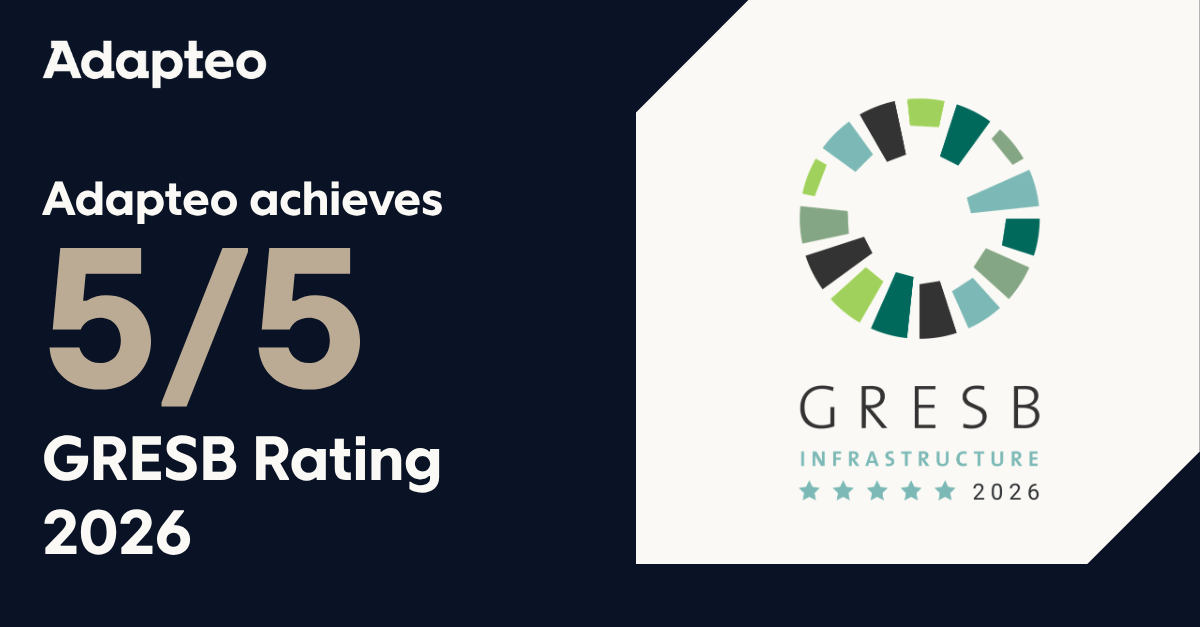
In the 2026 GRESB Infrastructure Asset Assessment, Adapteo Group achieved a 5-star rating, the highest rating level, with an overall score of 99.4 out of 100.
We also ranked first in our Northern Europe Social Infrastructure peer group, and 1st out of 569 participants specifically in 'Performance'. The rating reflects a broad base of work across the business, that we see what communities require and that our product, services and overall business model can respond and fill that gap.
Adapteo’s sustainability approach spans climate-related risk management, circularity, responsible sourcing, employee engagement, customer satisfaction and transparent reporting. It is also supported and complemented by external frameworks and assessments, including approved Science Based Targets initiative targets, a published sustainability report, and an EcoVadis Platinum rating across all business units. Each framework looks at the company from a different angle. Together, they give a fuller picture of how strategy, performance, and accountability are developing.
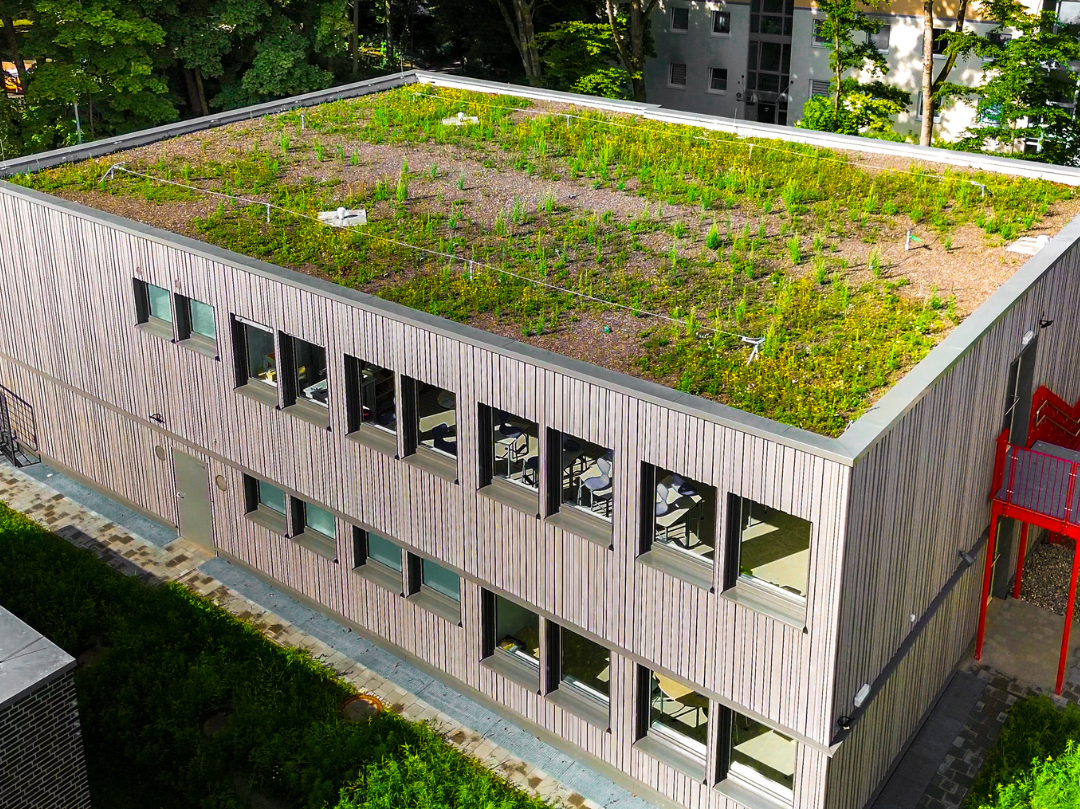
For a company working in adaptable social infrastructure, these frameworks are closely connected to the operating model. Our modular buildings are designed to be moved and reused. There when they’re needed to make sure society thrives and gone when they’re not to avoid stranded assets. This model brings flexibility to customers and communities while supporting more efficient use of materials and assets over time. In a sector where construction has traditionally been associated with long lead times and high resource intensity, adaptability has become a practical form of resilience.
"GRESB matters because it looks beyond individual initiatives. It tests whether sustainability is embedded in governance, risk management, performance data and business decision-making. That is why this result means a lot to me. Adapteo is building the systems and discipline needed for long-term resilience."
— Dr. Lina K Wiles, Chief Sustainability Officer, Adapteo Group
This is also where sustainability and business performance begin to converge. A circular building model depends on high utilization and long asset life. Those same characteristics support lower resource intensity and reduced need for new materials. Equally important, they also support customers facing their own climate, budget and capacity pressures.
GRESB is an important score for us because it captures both the management systems behind such a model and the performance outcomes that follow. Our GRESB result sits within that wider movement. It shows how a circular and flexible building model can be assessed through a rigorous ESG benchmark, and how sustainability performance can be built into the everyday mechanics of the business.
There is still work ahead. Standards are evolving, expectations are rising and the real estate and infrastructure sectors are moving toward more granular performance data. For Adapteo, that direction is aligned with the company’s own trajectory to continue to reduce climate impact and help customers adapt to changing needs. And a 5-star GRESB rating is a strong recognition of progress against one of the sector’s leading global benchmarks.
The built environment is often judged by what it leaves behind. Increasingly, it will also be judged by how intelligently it can change.